Avoid “Genericide” and “Mutilation” of Your Marks
Your incorrect use of your marks, or unchecked third party use (including licensee use) of your trademarks, can undermine the source-identifying significance of your trademarks and even result in loss of rights. Do not, and do not allow third parties to, use your trademark as a noun—instead it should be used as an adjective modifying a generic word. There are exceptions where well-known brand owners “get away with” noun usage, e.g., “buy an iPhone” or “buy a Ford” without adding the generic word “device” or “car.” For most brand owners, however, there is risk that noun usage will cause consumers to view the word as indicating a product category as opposed to a product emanating from one specific source. Trademarks can be victims of their own success if not properly managed. When your product or service name is viewed as a generic type of product or technology, you may have lost your trademark rights. Other rules: Don’t allow others to use your mark as a verb, or to combine the mark with other elements to create a hybrid mark that includes your mark.
Why Do Trademark Symbols Exist?
Trademark symbols exist to serve as notice to the public that the mark preceding the symbol is a trademark. Notice may serve to deter others from using the mark, but can also provide evidentiary benefits in any potential infringement suits.[1]
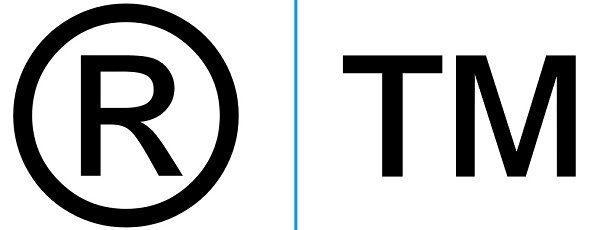
™ TM symbol stands for unregistered trademark, that is, a mark used to promote or brand goods; ® R circled symbol stands for registered trademark. The owner of a registered trademark may commence legal proceedings for trademark infringement to prevent unauthorized use of that trademark. However, registration is not required. Sep 22, 2017 Registered Trademark symbol (®) (or registered sign) is an often used symbol in computers.This symbol indicated that the associated name or logo has been duly registered with the authorities and any attempt to misuse the name or logo could be punished by law. Using the Registered symbol ® Alt Code (Windows) The Registered Trademark Symbol alt code is 0174. Even though this R Circle symbol does not have a dedicated key on the keyboard, you can still type it using the Alt code. To do this, press and hold the Alt key whilst pressing the Registered sign Alt code (0174) using the numeric keypad.
Choosing the Right Symbol – TM, SM, or ®?
| The TM symbol is used for common law marks that represent goods or services that are not federally registered with the USPTO, including marks whose registration is pending. The ™ symbol, and the word “trademark,” is interpreted as broadly covering both product marks and service marks. So the in the case of unregistered marks, the ™ symbol always is correct. | The SM symbol is used for common law trademarks that represent services. This symbol is less common (in part because the designation ™ is broader and more recognized), and should be used in a manner similar to the TM symbol. | The ® symbol is used for marks registered with the USPTO. This symbol can only be used once federal registration is granted (applying for a trademark isn’t enough), and can only be used in connection with goods and services listed in the federal registration. |
| A Note on Registration While you will receive common law protection without federally registering your trademark, registration carries multiple benefits including enhanced rights and evidentiary benefits at trial. You can learn more about registering your trademark at www.uspto.gov. | ||
When Should the Symbols Be Used?
Use of trademark symbols is not actually required by law, but doing so is beneficial. In fact, the ™ and SM symbols do not have any legal significance, but instead are informal ways of telling the world that you are claiming ownership of trademark rights in a word, phrase, and/or logo. The following are some general guidelines for using the trademark symbols.
Placement
The designation should be placed immediately following the mark that is registered. The norm is to place the symbol in superscript in the upper-right-hand corner, or in some cases, in subscript in the lower right-hand corner.
The Bluetooth® word mark and logos are registered trademarks owned by Bluetooth SIG, Inc.
Frequency
Use of a trademark symbol in the first prominent mention of a trademark (e.g., in a heading) is more important than repeated use throughout a brochure or web page. The symbol does not have to be used every time the mark is used. Instead, use the symbol in the first instance the mark is used, in the most prominent use of the mark, or both. Repeated use of trademark symbols can become cluttered.
| Print Materials – If the print materials consist of 1–2 pages, designation in the first instance of the mark is sufficient. For longer materials, it is recommended (but not a hard and fast rule) that the designation be used at least once per page in which the mark appears. A good way to achieve this is to place the designation anywhere there is a static representation of the mark that is duplicated on each page, such as in a header or footer. |
Electronic Materials – Use the designation at least once per web page in which the mark is used. Placing the designation in any static representation that is repeated on every page is also a good idea. |
| Social Media – The guidelines for marks appearing on social media can be more relaxed. Most companies only use the designation in their username/bio portion of a social media account, while some companies do not use the designation at all. The majority of companies will not use the designation following their mark in every blog post, status, or tweet, although some may try to do so in an effort to fight against their mark from being considered generic. |
The “little blue bird” logo is a registered trademark owned by Twitter Inc.
Third Party Use
When you permit a third party to use your trademarks, it is important to ensure your marks are used with proper designations. It is also important you monitor the licensee’s activities to ensure the quality of the products or services offered under the marks is consistent with the quality of your products or services so the marks do not lose their meaning in the minds of consumers as signaling a certain level of quality (which can result in loss of trademark rights). You should consider providing the third party with guidelines for using the marks (for example, how the marks should appear, when designation should be used, and whether an attribution statement must be made). In the case of licensees, you should also ask them to periodically send you samples of use (e.g., once a year) so you can confirm proper use. Finally, you should include reviews of third-party uses of your marks in the marketplace with an eye to appropriate, non-generic usage as part of your general policing activities.
Staying Updated
It is your responsibility to maintain your mark’s registration with the USPTO. This can be done using the USPTO’s Trademark Electronic Application System. Further, it is your responsibility to police and continue use of your marks. The length of trademark protection is potentially infinite, but failure to continue use of the mark, or failure to stop others from using your marks, without consent and/or improperly may result in a loss of federal protection.
Use Of The Registered Trademark Symbol
See the following resources for more information:
Basic Facts About Trademarks
U.S. Trademark Law - Federal Statutes
Trademark Manual of Examining Procedure
[1] If a plaintiff establishes use of the registered trademark symbol ®, the defendant will be deemed to have constructive notice that the mark is registered without the plaintiff having to prove actual knowledge.
As the resident Lionel Hutz here at Digett, I occasionally get asked about trademark and copyright issues — or, to be specific, the use of the symbols representing those concepts in design and copy elements. What I've found is that the questions remain the same from party to party, so I thought it might be helpful to cover some basic ground on the why, when, and how of using trademark and copyright symbols.
First, some important disclosures
Trademark Symbol
One: I am not a lawyer.
Let me get that little detail out of the way, lest the state bar comes knocking at my door. I grew up around them and I'm comfortable navigating that world, but if you want real legal advice, pony up and pay for an attorney. It's not necessary for a discussion of this topic, however, which leads me to my next point.
Two: This is only about the symbols — ®, ™,℠, ©, and the like.
It's not about the value of trademarks or copyright registration, since I don't want it thought that I'm discouraging the protection of one's intellectual property. Nor am I attempting to address how someone goes about the process of registering.
Moreover, I'm covering only situations faced here in the U.S.; this may not apply in other jurisdictions.
Why you should use trademark and copyright symbols
Contrary to popular belief, it's not required; you do not have to use trademark and copyright symbols in your design or copy to guarantee or safeguard your legal rights.
Additionally, there are good reasons to not use them, particularly if you want to avoid having your publications look like crop circles or an untitled Led Zeppelin album.
Granted, some may argue with me over this, especially if they fear trademark abandonment or infringement. However, while trademark rights are based on use, that means use of the mark, not the symbol.
But even if it's not legally required, using the symbols may have benefits. For one, should you ever find yourself in the unfortunate position of having to defend against unauthorized use of your mark or copy, it may help to show that you've established a record of putting people on notice.
In addition, some people might view mark registration as a sign of professionalism or stability.
Another important point: you may only use the registered trademark symbol (®) if your trademark is, indeed, registered with the U.S. Patent and Trademark Office.
There are no restrictions, however, on the use of ™ and ℠, which indicate an intention to seek trademark/servicemark status. There are also no limitations or restrictions on using the copyright symbol (©).
When and how you should use them
If you (or your lawyers) insist on using trademark and copyright symbols, the key is moderation. To illustrate:
'At Digett®: Interactive Media & Marketing™, we believe in protecting intellectual property℠ (© 2010 Digett®: Interactive Media & Marketing™, all rights reserved).'
Yes, that's an exaggerated scenario, but it's equally annoying when an organization uses the registered trademark symbol every time they print their name. It's unnecessary, not to mention illegible.
Use Of Registered Trademark Symbol In Text
Here are a few suggestions for judicious use:
In print
Consider using trademark symbols (registered or otherwise) one time in your copy, preferably in a header or toward introductory content. Leave it out an all subsequent references to the mark. Copyright symbols should not be used, in my view.
In logos/identity
This is a case-by-case call for me. Most logos I come across look stilted, even marred, by the inclusion of a trademark symbol. However, if it's considered during the planning process and not tacked on afterward, it can be done with grace. Just make sure it doesn't distract or confuse.
Online
On websites, I'm a fan of using a global footer for both copyright and trademark notices. It's usually unintrusive, and for those who are truly concerned about enforcement, it ensures inclusion on every page of the site.
In other online communications, particularly those that involve personal engagement, I tend to err on the side of exclusion. Nobody wants to talk with Digett®: Interactive Media & Marketing™.

Someone else's mark
Here's a potentially sticky situation. If you're using a trademark registered by another person or organization, you're not required to use the symbol unless specified by agreement.
However, many people choose to include it anyway just to avoid potential hassle. I think that's the safe play, but avoid multiple references/uses, if at all possible.
MONTHLY MARKETING INSIGHTS.
Get thought-provoking and actionable insights to improve how your firm makes a connection with your customers.